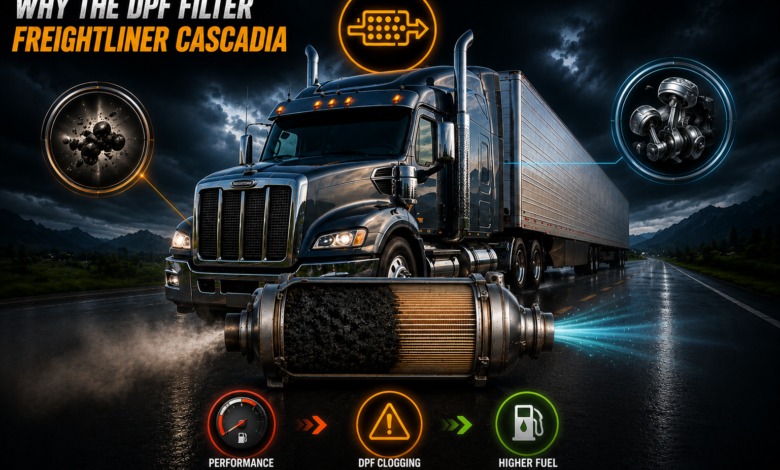
If you have been dealing with a recurring warning light tied to your dpf filter freightliner cascadia, you are not alone. Repeated DPF clogging is one of the most common and most expensive problems among Cascadia owners and fleet managers, and it costs the trucking industry millions of dollars every year in downtime, forced regenerations, and premature replacements.
The frustrating part is that most drivers do not understand why it keeps happening. They clean the dpf filter freightliner cascadia, put it back, and six weeks later the warning light is on again. That cycle does not have to be your reality. Once you understand the actual causes of repeated clogging in the Freightliner Cascadia’s aftertreatment system, you can take targeted steps to fix it for good.
This guide walks you through everything: the root causes, the warning signs, the real cost of ignoring it, and what it actually takes to solve it.
What the DPF Filter Freightliner Cascadia Owners Rely On Actually Does
The dpf filter freightliner cascadia trucks are equipped with is part of the aftertreatment system that sits downstream from the engine and upstream of the SCR (Selective Catalytic Reduction) system. Its job is to trap soot and particulate matter from the exhaust before it exits the tailpipe.
Under normal operating conditions, the DPF handles this through a process called regeneration. During passive regeneration, exhaust temperatures are high enough (typically above 550 degrees Fahrenheit) to burn off the accumulated soot automatically. When passive regen does not complete the job, the ECM triggers active regeneration, which injects additional fuel to raise exhaust temps and burn off the soot load.
When the system works correctly, you barely notice it. When it starts clogging repeatedly, something in that process is breaking down, and identifying the root cause is the only way to stop the cycle.
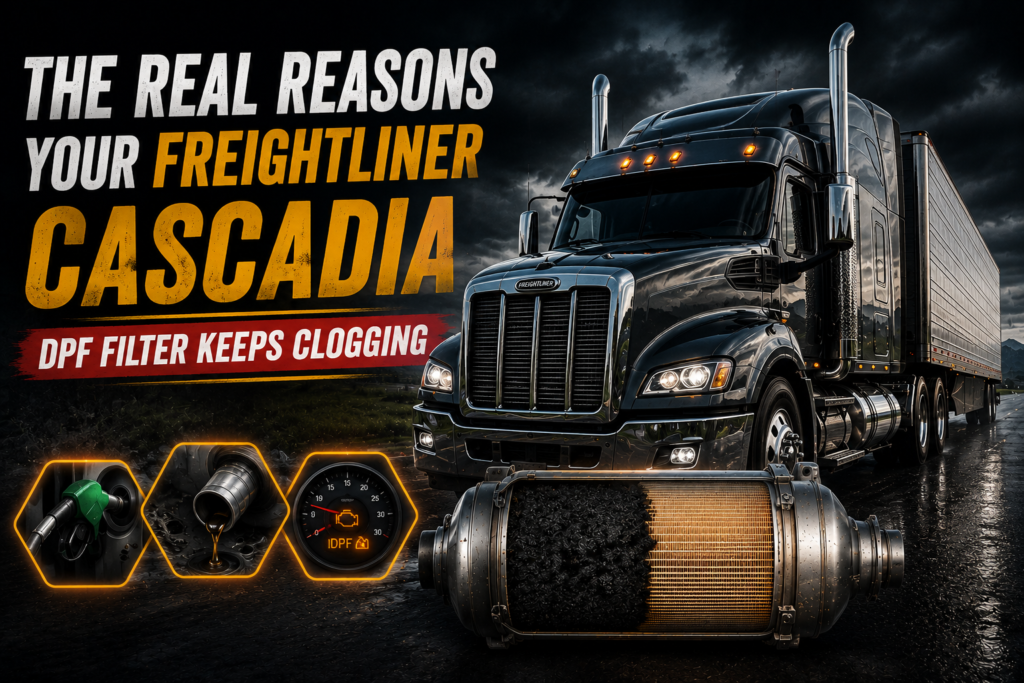
The Real Reasons Your Freightliner Cascadia DPF Filter Keeps Clogging
1. Too Much Short-Haul and Low-Speed Driving
This is the number one cause of repeated DPF clogging in Cascadia trucks. The Freightliner Cascadia is built for highway miles. When a truck spends most of its time doing city routes, lot moves, or short regional hauls, exhaust temperatures rarely climb high enough to trigger passive regeneration.
The soot keeps accumulating. Active regenerations get triggered more and more frequently but often get interrupted before they complete, because the truck reaches its destination before the regen cycle finishes. Incomplete regenerations leave behind partially burned soot and increase ash buildup at a much faster rate.
If your Cascadia is working in stop-and-go conditions or regularly running routes under 30 minutes, DPF clogging is almost inevitable without proper maintenance intervals.
2. Oil Consumption and Oil Ash Buildup
Unlike soot, ash cannot be burned away by regeneration. Ash in the DPF comes primarily from engine oil additives that sneak past the piston rings or valve seals and enter the combustion chamber. These metallic compounds survive combustion and deposit inside the filter’s cordierite substrate walls.
A Freightliner Cascadia with an engine that is consuming oil at an elevated rate will fill the dpf filter freightliner cascadia with ash far faster than a well-sealed engine. The ash layer gradually blocks the wall-flow channels and reduces the filter’s capacity to hold soot, which means the filter reaches its pressure differential limit more quickly and the warning light comes on again.
This is why trucks with high mileage or engines that burn oil sometimes need DPF cleaning far more often than the standard interval.
3. Coolant or Fuel Contamination
A failing injector O-ring, a cracked injector cup, or a head gasket leak can introduce raw fuel or coolant into the exhaust stream. These contaminants create a sticky, tar-like residue inside the DPF that is nearly impossible to burn off during regeneration.
If your Cascadia’s DPF keeps getting blocked within a few thousand miles of being cleaned or replaced, coolant or fuel contamination is a strong suspect. You will often see white smoke from the exhaust, abnormal coolant loss, or a sweet smell from the exhaust pipe when coolant is involved.
4. EGR System Problems
The Exhaust Gas Recirculation (EGR) system recirculates a portion of exhaust gases back into the intake to reduce NOx emissions. Over time, EGR coolers and EGR valves accumulate heavy carbon deposits. When the EGR system is partially blocked or the valve is sticking, combustion quality drops, the engine produces more soot per cycle, and the DPF fills up faster than normal.
A carbon-choked EGR cooler does not just affect DPF life. It also increases engine temperatures and can cause misfire codes. Cleaning the EGR system is often a necessary part of solving a chronic DPF clogging problem.
5. Incorrect or Low-Quality Engine Oil
The Freightliner Cascadia’s Detroit diesel engines and Cummins ISX variants are engineered to run on CJ-4 or FA-4 rated low-ash engine oil. Using older-rated oils with higher ash content, or switching to off-spec oil to save money, significantly accelerates ash accumulation inside the DPF.
This is an easy and very common mistake, especially in owner-operator situations where maintenance shortcuts seem like cost savings but turn into expensive filter replacements down the road.
6. Faulty or Poorly Calibrated Sensors
The DPF system in the Cascadia relies on a differential pressure sensor to monitor soot load. It also uses exhaust temperature sensors at multiple points in the aftertreatment system to manage regeneration timing.
A faulty differential pressure sensor can give the ECM false readings, either triggering unnecessary warning lights and forced regens or, more dangerously, failing to detect that the filter is actually approaching a critical blockage level.
If your Cascadia shows DPF warnings but the filter looks relatively clean when removed, or if the truck goes into derate mode unusually quickly after a cleaning, a sensor issue is worth investigating before spending money on the filter itself.
7. Deferred or Interrupted Regeneration Cycles
Many drivers either do not know when active regeneration is occurring or they actively interrupt the process by turning off the engine. Every interrupted regen leaves partially burned soot inside the filter that is harder to remove in subsequent cycles.
Over time, this incompletely burned material contributes to a dense layer that reduces filter capacity significantly. Fleet operators who see DPF issues across multiple trucks in the same fleet should look at driver behavior and route patterns before assuming there is a mechanical problem.
Warning Signs the DPF Filter Freightliner Cascadia System Is Getting Critically Clogged
Recognizing the early signs can save you from a full derate and roadside breakdown:
- The exhaust filter warning light comes on more frequently than it used to
- Active regeneration cycles are happening every few hundred miles
- You notice a loss of power or sluggish acceleration, especially under load
- Fuel consumption has increased noticeably without a change in routes or load
- The truck goes into derate mode and limits speed to 5 mph
- Black or white smoke from the exhaust during normal operation
- Fault codes related to exhaust backpressure or aftertreatment system
If you are seeing multiple symptoms together, do not wait. A severely blocked DPF can cause turbocharger damage, EGR failures, and in extreme cases, cracked DPF substrate that requires complete replacement.
To understand the early warning signs in more detail before they escalate, take a look at our breakdown of clogged DPF filter symptoms before engine damage happens.
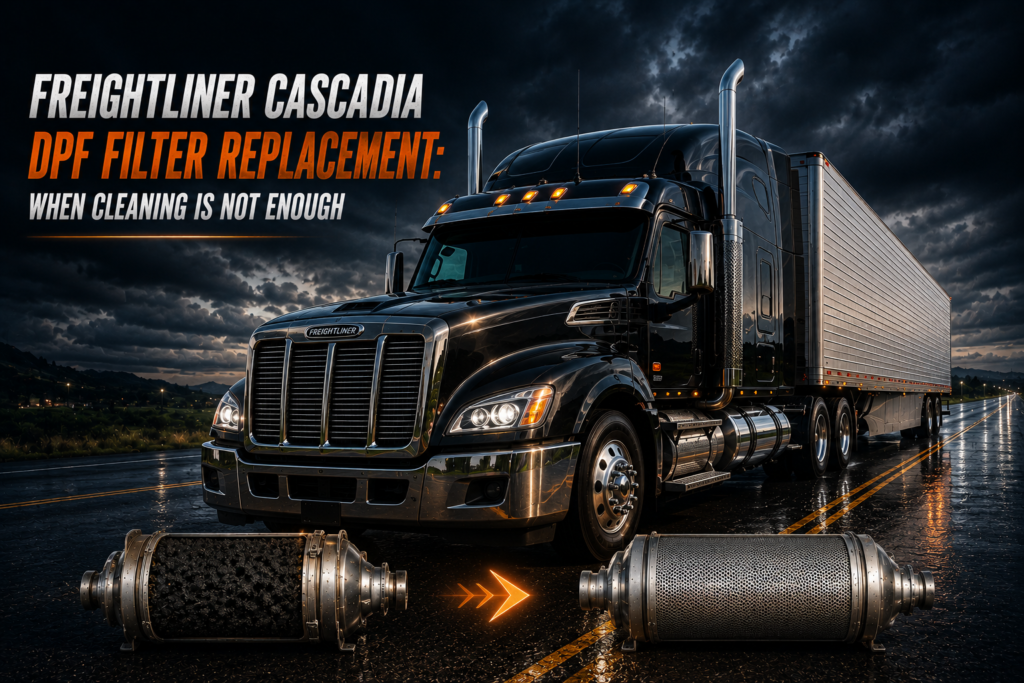
Freightliner Cascadia DPF Filter Replacement: When Cleaning Is Not Enough
Cleaning should always be the first option considered. A properly cleaned DPF filter can perform like new, and professional hydraulic cleaning removes both soot and a significant portion of ash from the substrate channels.
However, there are situations where freightliner cascadia dpf filter replacement becomes necessary:
The filter substrate is cracked or melted. This typically happens after a severe or prolonged clog causes a thermal runaway event during regeneration. Cracked substrate cannot be repaired and the filter must be replaced.
Ash loading is too severe for cleaning to restore adequate flow. While cleaning removes much of the ash, heavily loaded filters that have gone well past their recommended cleaning intervals may not recover to acceptable backpressure levels even after professional cleaning.
The filter has been chemically contaminated. Coolant intrusion or fuel contamination that has baked into the substrate can create residue that standard cleaning processes cannot fully remove.
The filter has exceeded its service life. DPF filters are rated for a certain number of cleaning cycles and a certain total operating life. Older units on high-mileage Cascadia trucks may simply be at end of life.
Freightliner Cascadia DPF Filter Price: What to Expect
The freightliner cascadia dpf filter price varies significantly depending on whether you are purchasing OEM or aftermarket, and whether you are buying new or remanufactured.
A new OEM DPF for a Freightliner Cascadia typically runs between $2,500 and $4,500 depending on the engine variant (Detroit DD13, DD15, or Cummins ISX). Aftermarket units from reputable manufacturers can bring that range down to $1,200 to $2,500. Remanufactured units offer another cost option, generally between $900 and $1,800 with a core charge.
Professional DPF cleaning, by contrast, typically costs $300 to $500 and can restore the filter to near-new performance if the substrate is in good condition. For most Cascadia operators dealing with clogging issues, cleaning is the smarter first step before committing to replacement.
For a side-by-side cost analysis, check our detailed post on DPF cleaning vs DPF replacement: which is the right choice for your truck.
How to Remove the DPF Filter on a Freightliner Cascadia
Understanding how to remove dpf filter on freightliner cascadia is useful whether you are taking the filter to a cleaning service or replacing it yourself. Here is a general overview of the process. Always consult your specific model year’s service manual before starting any work.
Tools needed: Breaker bar and socket set, torque wrench, penetrating oil (for rusted clamps), wire brush, safety glasses, heat-resistant gloves, exhaust gasket(s).
Step 1: Allow the exhaust system to cool completely. Never work on a hot aftertreatment system. The DPF and surrounding components retain heat for a long time after shutdown.
Step 2: Disconnect the differential pressure sensor lines. These are the small hoses running from the DPF canister to the sensor mounted on the body or chassis. Handle them carefully to avoid cracking the plastic fittings.
Step 3: Disconnect the temperature sensor connectors. There are typically two or three temperature sensors along the aftertreatment system that need to be unplugged.
Step 4: Loosen the V-band clamps or flange bolts. The DPF is connected to the DOC (Diesel Oxidation Catalyst) on the inlet side and to the SCR on the outlet side via clamps. Apply penetrating oil to any rusty hardware and allow it to soak before applying force.
Step 5: Support the DPF canister. The unit is heavy. Use a transmission jack or an assistant to support the weight before fully removing the clamps.
Step 6: Remove the DPF and inspect the gaskets. Gaskets should be replaced any time the DPF is removed. Reusing old gaskets often leads to exhaust leaks after reinstallation.
Step 7: Cap open pipes during transport. If you are taking the DPF to a cleaning service, cap both ends to prevent debris from entering the substrate.
Reinstallation is the reverse of removal. Always torque clamps and fasteners to spec and perform a short drive cycle after reinstallation to verify the system clears any stored codes.
The Right Way to Solve Chronic DPF Clogging in Your Cascadia
A one-time cleaning does not fix a chronic clogging problem if the underlying cause has not been addressed. Here is a systematic approach:
Step 1: Diagnose the root cause first. Pull fault codes with a quality scan tool. Check oil consumption over the last several oil changes. Inspect for signs of coolant or fuel contamination. Review EGR cleaning history and test the differential pressure sensor.
Step 2: Fix the contributing mechanical issues. If EGR cleaning is overdue, do it before reinstalling the DPF. If the truck has elevated oil consumption, investigate and repair before returning to service. If sensors are faulty, replace them.
Step 3: Use professional hydraulic DPF cleaning. Hydraulic pulsing cleaning is the most effective method for removing both soot and ash from a Cascadia DPF. It forces pressurized cleaning solution through the substrate channels in alternating directions, dislodging compacted ash that baking methods cannot remove.
Step 4: Switch to the correct low-ash oil. Verify you are running CJ-4 or FA-4 rated oil. If you have been running older-spec oil, switch at the next oil change.
Step 5: Adjust maintenance intervals based on duty cycle. A Cascadia doing primarily short-haul work needs DPF cleaning at shorter intervals than a highway truck. Work with your maintenance provider to establish realistic intervals based on actual operating conditions.
Step 6: Train drivers on regeneration. Drivers should know not to interrupt active regeneration cycles, how to identify when a regen is in progress, and when to initiate a parked (forced) regeneration if the truck has been running low-load cycles.
Take Action Before the Next Derate
Chronic DPF clogging in a Freightliner Cascadia is a solvable problem, but only if you treat the cause rather than just the symptom. A cleaning every few months with no change to oil spec, EGR maintenance, or driver behavior is a cycle that will cost you far more than a proper diagnostic and fix.
If your Cascadia is showing DPF warnings, losing power, or spending too much time in active regeneration, our team at 30 Minute DPF Clean can help. We use professional hydraulic cleaning that gets the filter back to near-new flow levels, and we can help you identify the underlying issues keeping your filter from performing as it should.
Contact us today to schedule your Freightliner Cascadia DPF service and stop the clogging cycle for good.
Frequently Asked Questions
Q1: How often should I clean the dpf filter freightliner cascadia trucks use?
Most Freightliner Cascadia operators should plan for DPF cleaning every 150,000 to 200,000 miles under typical highway conditions. However, trucks operating in heavy stop-and-go or short-haul duty cycles may need cleaning every 75,000 to 100,000 miles. Your truck’s actual regeneration frequency is a good practical indicator. If active regen is happening more than once every few hundred miles, it is time to inspect and likely clean the filter.
Q2: Can I drive a Freightliner Cascadia with a clogged DPF?
You can drive it briefly, but it is not advisable. When the DPF reaches a critical blockage level, the ECM will initiate a derate that limits vehicle speed to protect the engine. Continuing to push a heavily clogged DPF risks exhaust backpressure that can damage the turbocharger and cause cylinder head issues. Address clogging promptly.
Q3: What is the difference between soot and ash in the DPF?
Soot is carbon-based combustion byproduct that can be burned off during regeneration. Ash consists of metallic compounds from engine oil and fuel additives that survive combustion and accumulate permanently in the filter substrate. Ash can only be removed by physical cleaning, not by regeneration. Ash buildup is the primary reason DPFs need periodic professional cleaning regardless of how well the regeneration system is working.
Q4: Why does my Cascadia keep going into derate mode even after DPF cleaning?
If your truck is going into derate mode shortly after a cleaning, check the differential pressure sensor before assuming the DPF is clogged again. A faulty sensor can trigger false high-pressure readings. Also verify that all aftertreatment connections and sensor lines were properly reattached during reinstallation, and that there are no exhaust leaks at the DPF inlet or outlet.
Q5: Is aftermarket DPF as good as OEM for a Freightliner Cascadia?
Quality aftermarket DPF filters from reputable manufacturers can perform comparably to OEM units. The key is buying from a supplier that meets or exceeds OEM substrate specifications. Avoid very low-cost units from unknown suppliers, as substandard substrate materials can crack under thermal cycling. When in doubt, ask your supplier about their product’s substrate source and warranty terms.