
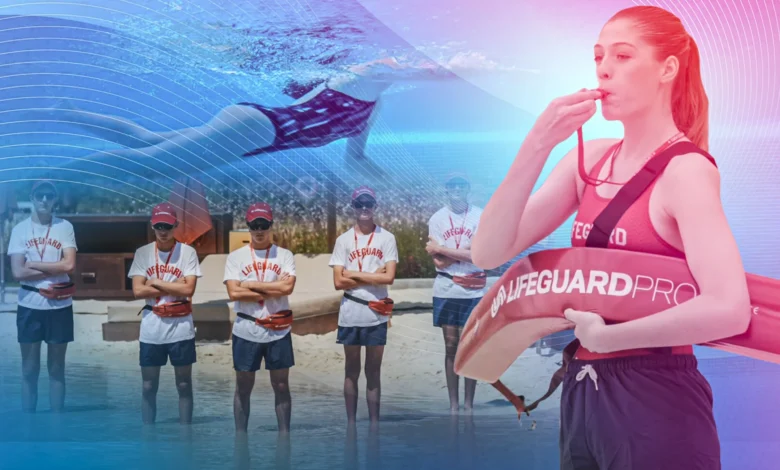
You want a reliable path into water safety. The American Lifeguard Association offers structured lifeguard training built on clear standards and real skills. You train for pools and waterparks. You learn how to prevent incidents and respond fast when they happen.
Why choose this lifeguard training?
- Meets recognized safety standards
- Focuses on real rescue scenarios
- Includes CPR, AED, and first aid certification
- Prepares you for paid roles in pools and waterparks
- Builds skills you can use from day one
- Follows structured training methods used across facilities
- Helps you stay alert and disciplined during long shifts
- Trains you to act fast under pressure
This training prepares you for real situations, not theory alone.
Course entry requirements
You must prove basic fitness before training starts.
- Swim 300 yards using front crawl or breaststroke
- Tread water for 2 minutes using only your legs
- Retrieve a 10-pound weight from the pool bottom
- Swim 20 yards with the weight
- Exit the pool within 1 minute 40 seconds
These steps confirm you can handle rescue demands. They test endurance, strength, and control in water. If you pass, you are ready to move into skill-based training.
What you learn during lifeguard training
Surveillance and prevention
You learn how to scan zones and detect risk early.
- Spot distressed swimmers in seconds
- Monitor high traffic areas like wave pools
- Control slide dispatch points
- Enforce safety rules with consistency
- Reduce accidents before they happen
Prevention is your first responsibility. Strong scanning skills reduce the need for rescue.
Rescue skills
You train with real equipment and timed drills.
- Use rescue tubes for active victims
- Perform submerged victim recovery
- Manage spinal injuries in shallow and deep water
- Practice team-based rescues
- Remove victims safely from water
You repeat drills until your response becomes automatic. Speed and accuracy matter in every rescue.
CPR, AED, and first aid
You train to respond to medical emergencies.
- Perform CPR on infants, children, and adults
- Use an AED during cardiac arrest
- Provide ventilations with a bag valve mask
- Control bleeding and manage shock
- Respond to heat stroke, seizures, and choking
Cardiac emergencies require immediate action. Your response can determine survival.
Facility safety and maintenance
You protect more than swimmers.
- Check pool chemical levels like pH and chlorine
- Inspect rescue gear daily
- Report hazards fast
- Keep decks and equipment safe for public use
- Maintain clean and safe environments
Safe facilities reduce risk. Regular checks prevent accidents and illness.
Standard operating procedures
You follow clear protocols on every shift.
- Stay alert at all times
- Use whistles and hand signals for communication
- Document incidents with accurate reports
- Work within legal responsibilities
- Follow emergency action plans
Consistency improves safety. Clear procedures guide your actions during stress.
Victim recognition
You learn to identify silent distress.
- Victims often cannot call for help
- Bodies stay vertical with no kick
- Arms press down on water, not wave
- Head remains low in water
- Early action prevents fatal outcomes
Recognition must happen within seconds. Delay increases risk.
Teamwork in emergencies
You train as part of a unit.
- One guard rescues
- One clears the pool
- One calls emergency services and brings AED
- Others control the scene
Clear roles improve response time. Team coordination reduces confusion and supports the victim.
Course format
Training combines theory and hands-on work.
- Online modules for basic knowledge
- In-person sessions for skills practice
- Final written exam with minimum 80 percent score
- Practical test with live rescue scenarios
You must pass both parts. Instructors evaluate your technique and decision making.
What to bring
- Swimsuit
- Towel
- Whistle
- Notebook for learning
- Focus and discipline
Preparation helps you perform better during sessions.
Job opportunities after certification
You can start working soon after certification.
- Public pools
- Private clubs
- Waterparks
- Resorts
- Community centers
Many facilities hire seasonal and full-time lifeguards. Pay often ranges from 12 to 18 dollars per hour depending on location and experience. Entry-level roles provide steady work during peak seasons.
Career growth options
Your lifeguard training builds a foundation.
- Become a Water Safety Instructor
- Teach swimming to all age groups
- Train as a Certified Pool Operator
- Move into facility management
- Take leadership roles such as head guard
Each step adds responsibility and higher pay. Training supports long-term growth in aquatics.
Fitness expectations
You must stay ready for physical work.
- Swim regularly to build endurance
- Train strength for lifting victims
- Maintain stamina for long shifts
- Practice rescue drills outside training
Strong fitness improves response time and safety. Your body must support your role at all times.
Legal responsibilities
You have a duty to act when needed.
- Follow safety regulations
- Record incidents clearly
- Maintain certification through recertification
- Attend in-service training sessions
Accurate documentation protects you and your employer. Staying current keeps your skills sharp.
Equipment use
You learn to handle professional tools.
- Rescue tubes for active rescues
- Backboards for spinal injuries
- AED units for cardiac response
- First aid kits for immediate care
Proper use of equipment improves outcomes during emergencies.
Exam expectations
The final test checks knowledge and performance.
- Written exam with minimum passing score of 80 percent
- Practical assessment with rescue scenarios
- Demonstration of CPR and AED skills
- Deep water victim recovery
You must stay calm and follow correct steps. Instructors look for control and precision.
How to enroll
- Visit the American Lifeguard Association website
- Find a course near you
- Register and complete prerequisites
- Attend scheduled sessions
Courses run throughout the year. Early registration helps secure your spot.
Certification value
You gain skills that save lives. You learn discipline, awareness, and responsibility. You build confidence during emergencies. Lifeguard training prepares you for real situations where fast action matters.
This certification strengthens your resume. Employers look for trained candidates who follow procedures and handle pressure. Your training shows you meet those expectations.
You also join a network of trained professionals. This creates more job options and long-term opportunities in aquatics. Start your lifeguard training with the American Lifeguard Association. Build skills, earn certification, and take on a role where your actions protect lives every day.
READ ALSO: How to Download Videos Online for Free: Best YouTube Video Downloader