Why is everyone talking about B2B SaaS?
Have you noticed how many businesses now rely on tools they never install? Why do companies pay monthly for software instead of owning it? And what makes B2B SaaS such a powerful model today?
These questions matter more than ever. As companies move online, software has become the backbone of daily operations. That is where B2B SaaS comes in.
What is B2B SaaS?
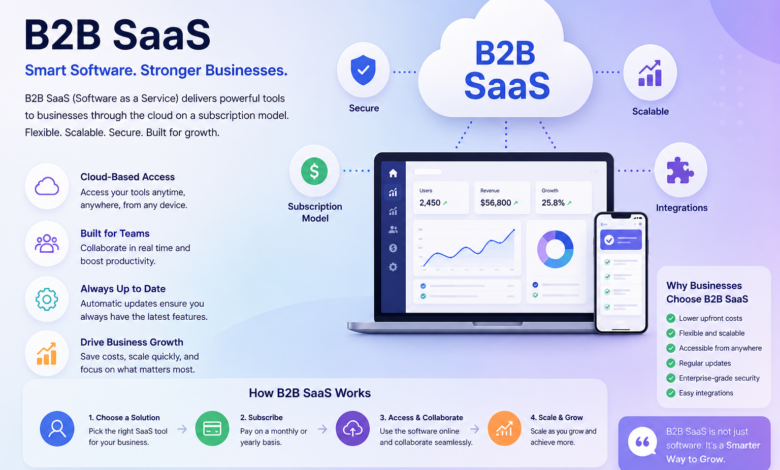
B2B SaaS stands for Business-to-Business Software as a Service. In simple terms, it is software that companies sell to other companies through a subscription model.
Instead of buying software once, businesses pay regularly to use it. This setup allows them to access tools through a browser without worrying about installation or updates.
For example, a company might use SaaS tools for customer management, accounting, or communication. The provider handles maintenance while the user focuses on results.
How B2B SaaS Works in Real Life
Let’s make this practical. Imagine a marketing team that needs to track leads and manage campaigns. Instead of building software from scratch, they subscribe to a SaaS platform.
They log in online. They store data securely. They collaborate with their team in real time. All of this happens without dealing with servers or manual updates.
As a result, businesses save time and reduce costs. At the same time, SaaS providers earn recurring revenue.
Why B2B SaaS Is Growing So Fast
So why is B2B SaaS everywhere right now?
First, it offers flexibility. Companies can scale up or down based on their needs. They do not need large upfront investments.
Second, it improves accessibility. Teams can work from anywhere as long as they have internet access.
Third, it supports innovation. Providers roll out updates regularly, which means users always get the latest features.
Because of these benefits, many businesses are shifting toward SaaS solutions. If you are exploring growth strategies, resources like 15 Global Content Marketing Agencies Enterprise Brands Are Evaluating in 2026 can help you understand how SaaS companies scale their reach.
Key Features of B2B SaaS Products
Not all software is SaaS. So what makes B2B SaaS unique?
One key feature is subscription pricing. Users pay monthly or yearly instead of buying a license.
Another feature is cloud hosting. The software runs on remote servers rather than local machines.
Security also plays a big role. SaaS providers invest heavily in protecting user data.
Finally, integration is essential. Most B2B SaaS tools connect with other platforms, which helps businesses streamline workflows.
Challenges in the B2B SaaS Space
While B2B SaaS offers many advantages, it is not without challenges.
Customer retention is one major issue. Since users can cancel subscriptions easily, companies must deliver consistent value.
Competition is another factor. The market is crowded, and standing out takes effort.
Pricing strategy can also be tricky. Charge too much, and customers leave. Charge too little and profits suffer.
Therefore, successful SaaS companies focus on user experience and long-term relationships.
How Businesses Choose the Right B2B SaaS
Choosing the right tool is not always simple. So what should companies look for?
First, they should evaluate their needs. Not every tool fits every business.
Next, they should test usability. A complex interface can slow down teams.
They should also check support services. Reliable customer support makes a big difference.
Finally, pricing must match the value offered. A good SaaS product should feel like an investment, not an expense.
If you want to explore platforms that help businesses grow, you might find Jorbina useful as a starting point.
The Future of B2B SaaS
Where is B2B SaaS heading next?
Artificial intelligence is shaping the future. Many SaaS tools now include smart features that automate tasks and provide insights.
Customization is also increasing. Businesses want tools that adapt to their workflows rather than forcing them to adjust.
In addition, security will remain a top priority. As data grows, so do the risks.
Overall, B2B SaaS is not slowing down. In fact, it is becoming a core part of how companies operate.
FAQs About B2B SaaS
What is a B2B SaaS?
A B2B SaaS is software sold by one business to another through a subscription model. It is accessed online and managed by the provider.
Is Apple a B2C or B2B?
Apple is mainly a B2C company because it sells products directly to consumers. However, it also offers some B2B solutions for enterprises.
Is Netflix B2B SaaS?
Netflix is not B2B SaaS. It is a B2C subscription service that delivers entertainment to consumers.
Is Zoom a B2B SaaS company?
Yes, Zoom is a B2B SaaS company. It provides communication tools that businesses use for meetings and collaboration.
Is ChatGPT a SaaS product?
Yes, ChatGPT is a SaaS product. Users access it online and often pay through a subscription model for advanced features.
Final Thoughts
B2B SaaS is more than just a trend. It is a shift in how businesses use technology.
So ask yourself this. If software can save time, reduce costs, and improve efficiency, why wouldn’t companies adopt it?
The answer is clear. B2B SaaS is here to stay, and it will continue shaping the future of business.