It costs a lot to start a business. Founders have to buy a lot of equipment just to run their business before they even make their first dollar. Getting commercial kitchen equipment, medical devices, construction machinery, or basic office technology without emptying the business bank account is one of the first and most important problems that a new business owner has to deal with. That’s where equipment leasing companies come in. The question is whether they are really a good way for startups to get money, or just the easiest way.
What Equipment Leasing Companies Are Actually Offering Your Business
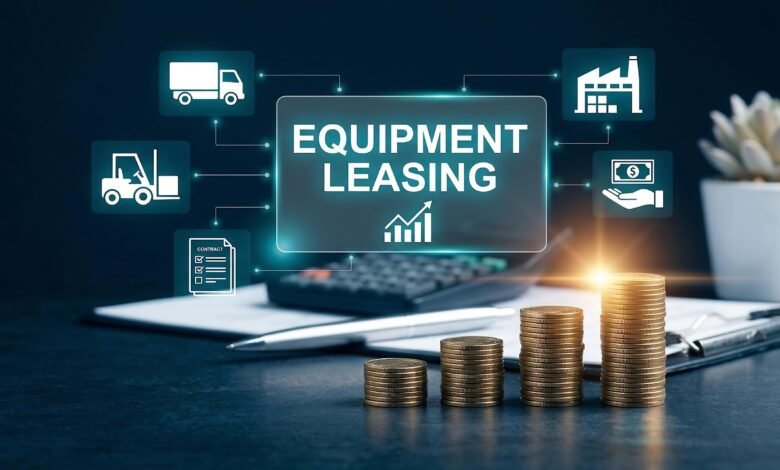
Equipment leasing companies enable companies to access and utilize necessary tools for a fixed monthly fee, rather than buying the asset completely. Essentially, the leasing company purchases the equipment and allows the business to use it within the period of the agreement, which usually lasts between 24 and 72 months. Upon completion of the lease term, a business can return the leased asset, renew the leasing agreement or acquire the equipment at a price agreed upon during the contract negotiation stage.
Many equipment-leasing companies now work entirely online, with decisions about approval coming in one to two days, making them considerably more accessible than bank loans for early-stage businesses. For founders with early-stage businesses who search equipment leasing companies near me expecting to find only local brick-and-mortar offices, in 2026, national and online lenders serve most markets directly.
Why Equipment Leasing Companies Make Financial Sense Early On
Most startups operate on very tight margins and have costs that are not always clear. That’s why equipment leasing companies appeal to most new businesses. Renting any machinery prevents startups from making any big upfront purchase and save funds for other expenses like payroll, marketing, inventory and other daily operations.
Another appeal is that these companies, especially heavy equipment leasing companies, offer a lot of flexibility to startups and that’s make them a good option for the initial years of the business. Beyond these two points, here are some more reasons why startups lean towards these equipment leasing companies:
- Lower barrier to entry: A credit score of 600 or higher is often seen as a good sign that you will be approved for a lease. Some providers even offer options for business owners with lower scores.
- No large down payment: Most leases offer almost 100% financing, which is very rare with regular small business loans.
- Technology upgrades: Leasing allows founders to upgrade to newer equipment at the end of the term instead of being stuck with aging assets.
- Tax advantages: With operating leases, monthly payments are typically 100% tax-deductible as business expenses, and capital leases may qualify for the Section 179 deduction, which allows businesses to deduct up to $1,250,000 in qualifying equipment costs for 2025.
What Equipment Leasing Companies Will Not Tell You Upfront
The benefits are real, but there are costs that need to be looked at honestly. The biggest one is that leasing doesn’t build equity. When a business leases something, they pay for its use over a set amount of time and then return it. There is no ownership unless the buyout clause is used. If you buy equipment that will last a long time, you may end up paying more over time than if you had bought it outright.
Startups also experience a lot of friction compared to established firms when dealing with equipment leasing firms. Leasing world defines a startup as any business less than two years old, and lenders have more scrutiny on such applicants, given that 34% of businesses collapse during the first two years. Interest rates tend to be higher when borrowing, and some lenders refuse to deal with brand-new businesses entirely.
That being said, heavy equipment leasing companies are often more flexible with new businesses. This is because machinery, commercial vehicles, and industrial assets hold their value well, which lowers the risk for lenders.
What Lenders Actually Want to See from a Startup Applicant
Getting approved for a loan from an equipment leasing company as a startup is easier than getting a bank loan, but there are still some conditions. Most lenders will look at the following:
- Personal credit score of the business owner (600 and above preferred)
- Time in business, with many lenders requiring at least six months
- A down payment or security deposit, which is common for thin-credit applicants
- Business registration documents, bank statements, and an equipment quote from the vendor
- First and last month’s payment upfront, in many cases
The decision to approve or deny a startup is mostly based on credit. It is important to look at the business plan and the value of the equipment, but the personal credit strength of owners with 15% or more of the company is the most important factor.
Equipment Leasing Companies vs. Other Options
One choice for startups is to lease equipment. Knowing how these equipment leasing companies compare can help them make a better choice.
Here is how the most common alternatives measure up:
- Equipment loans: It can help you build business credit and eventually own the equipment, but they cost more up front and take longer to qualify for.
- SBA loans: These loans have lower rates, but the time it takes to process them and the rules for who can get them make them hard for most new businesses to get.
- Business lines of credit: They should be flexible, but startups with little operating history don’t often get them.
Conclusion
Equipment leasing companies aren’t the best choice for everyone, but they are a good way for many startups to get the money they need, especially if keeping cash is more important than owning assets for a long time. Equipment leasing companies that rent out equipment to new businesses should look at the whole picture of an application, not just how long it has been in business. Before signing a lease, founders should look at several equipment leasing companies, read the terms at the end of the term carefully, and see if the monthly payment plan fits with their current income. Most of the time, the best financing choice isn’t the most exciting one. In fact, it’s the one that keeps the business going without taking on too much risk.