Have you ever stopped to wonder what it’s like to be connected to one of the most influential thinkers in modern history? What does it mean to share your life with someone whose ideas have shaped entire fields of study? That’s exactly the situation of Valeria Wasserman. Her name often comes up because she is married to Noam Chomsky. But her story goes beyond that connection. It touches on her own career, her life experiences, and the public interest in how two very different lives intersect.
Growing Up in Brazil
Valeria Wasserman was born in Brazil in the early 1960s. She grew up far from the global spotlight, where her life would later unfold. She pursued her education in her home country, attending reputable universities. In law school at Universidade Federal Fluminense, she built a foundation in legal thinking. She also studied languages at Pontifícia Universidade Católica do Rio de Janeiro, which helped shape her later career. On top of that, she took classes in capital markets at the Universidade de São Paulo. All of these experiences prepared her for professional work that would rely on precision, analytical skills, and deep thinking.
Building a Career in Law and Translation
Before her life became more public, Valeria established herself professionally through a mix of legal, analytical, and language work. She worked as an investment analyst and in legal environments in Brazil. Later, she shifted her focus to translation. That work took her into academic and intellectual circles where communicating complex ideas accurately matters. Translators play a key role in making research, books, and academic work accessible across languages. For Valeria, this was not just a job but a craft that tied together her skills in law and language.
This blend of experiences makes her story more than just a personal one. It shows how professional skills can connect different parts of a person’s life.
Meeting Noam Chomsky
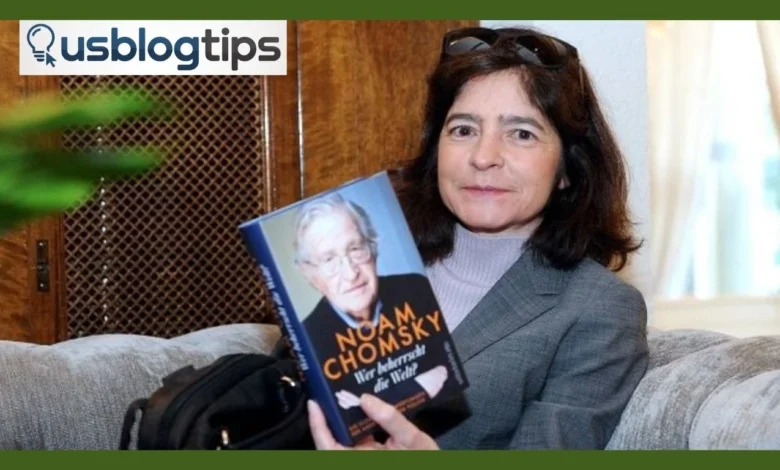
In 2014, Valeria Wasserman married Noam Chomsky. Chomsky is best known as a linguist, philosopher, author, and political commentator whose work has shaped how we think about language and society. Their marriage brought Valeria into the spotlight. Whereas before she lived a relatively private life, her personal choices are now of interest to a wider public.
People noticed the age difference between them. Noam Chomsky was already an established figure when they met. Some discussions focused on that gap. Others looked at what it would mean to share life with someone so deeply immersed in intellectual work. But beyond the curiosity, their partnership is about two individuals choosing to build a life together.
Life After Marriage
Since they married, Valeria has lived partly in the United States and partly in Brazil. She continued her translation work and took on new roles in supporting her husband’s work and public presence. As Chomsky grew older and faced health challenges, including a serious stroke in 2023, Valeria became more involved in handling communication with the media and institutions. She became a sort of spokesperson for his public life, helping clarify his condition and his plans as he moved into later stages of life.
That shift shows how personal relationships and public roles can overlap. It also highlights how someone can adapt to new responsibilities as life changes.
Controversy and Public Scrutiny
With visibility often comes controversy. In early 2026, Valeria addressed questions about her and Chomsky’s past interactions with Jeffrey Epstein. Epstein was a financier whose criminal conduct was widely condemned. Valeria made a public statement acknowledging that the decisions they made in the past regarding Epstein were mistakes. She expressed regret and sympathy for Epstein’s victims. These comments drew attention because Chomsky’s work often criticizes powerful individuals and systems. The contrast between those ideas and the personal contact with Epstein sparked conversation in public forums.
This moment illustrates how even private choices can take on a larger dimension when public figures and their partners are involved.
Family and Personal Life
Valeria and Noam Chomsky do not have children together. But she became a stepmother to his three children from a previous marriage, Aviva, Diane, and Harry. Blended families can be complex and private. The public does not have a full picture of their day‑to‑day lives. But family relationships are part of how Valeria’s life has unfolded since her marriage.
Despite being in the public eye more than before, Valeria has kept her personal history largely out of the spotlight. Details about her parents and early family life are not widely published. What we do know is that she grew up in a setting that valued education and language. From that foundation, she built a life that now combines personal and public dimensions.
How People See Her
To some people, Valeria is known simply as Valeria. Wasserman, the woman married to Noam Chomsky. To others, she represents a figure who stepped into a very public role later in life. Some see her as an intellectual peer. Others focus on her position beside a famous husband. But if you step back from headlines and speculation, her story is also about skill, experience, and personal choice.
Her life invites questions that go beyond public curiosity: How do you manage your own professional identity when your partner is a global figure? How do you handle public scrutiny when your choices become topics of discussion? These are questions many people face in quieter forms. For Valeria, they unfolded on a larger stage.
What You Can Learn from Her Story
Valeria Wasserman’s experience can feel familiar even if the circumstances are extraordinary. She built her own career before entering a highly visible partnership. She adapted to new roles and responsibilities over time. She handled public questions about her choices with straightforward statements. Through all of this, she shows that life is rarely static. It evolves, sometimes in directions we do not expect.
Conclusion
Valeria Wasserman’s journey is not a simple footnote in someone else’s life. It reflects the path of someone who learned, worked, and adapted. She built professional skills that mattered. She chose relationships that shaped her life in new ways. And she faced public attention with a grounded approach.
If her story catches your interest, it is worth thinking about the person behind the public headlines. What we see in the news is part of the picture. But there is also a life of work, relationships, and choices that exist outside of that frame.
Frequently Asked Questions
Who is Valeria Wasserman?
Valeria Wasserman is a Brazilian translator and the second wife of the renowned linguist and thinker Noam Chomsky. She worked in legal and analytical fields before focusing on translation and supporting public communication.
What ethnicity is Noam Chomsky?
Noam Chomsky is an American of Ashkenazi Jewish descent, born and raised in the United States. His family heritage traces back to Jewish immigrants from Eastern Europe.
Who was Chomsky’s first wife?
Noam Chomsky’s first wife was Carol Doris Schatz. They were married for many decades until she died in 2008.
What are Valeria Wasserman’s achievements?
Valeria’s accomplishments include a successful career as a translator, her work in legal and analytical roles, and her role in supporting academic communication. She has also navigated public scrutiny with clear and direct responses.
What is Casey Wasserman accused of?
Some public discussions have focused on unrelated figures like Casey Wasserman. For insight into how public figures can face scrutiny, see the article “Jorbina“ or read about *Leah Ayres: The Actress Who Transcended Hollywood* and “Getting to Know Robert Belushi.” Another related perspective comes from the piece Cy Kass: A Closer Look at the Quiet Life of Alex Wagner and Sam Kass’s Son. These links show how public profiles and personal histories often intersect in media narratives.