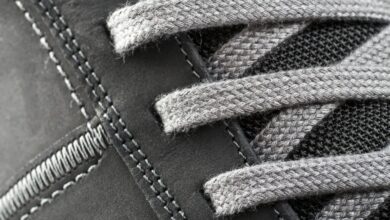
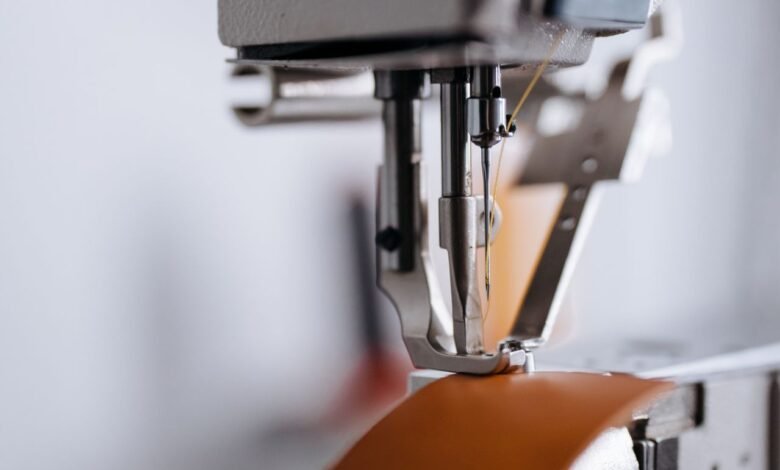
In shoe manufacturing, small details can have a major impact on the final product. Seam allowance and stitch density are two of the most important but frequently overlooked aspects of footwear construction. These factors will affect the durability, longevity, appearance, consistency, and footwear endurance.
The high-quality leather, tissues, soles, purchase, and sewing machine thread are not enough to design a good shoe. Precise construction techniques must be applied in assembling these materials. The amount of material outside the stitching line is given by the seam allowance; the closer the stitching, the greater the stitch density. They are designed to promote good, durable footwear when they are appropriately proportioned. If not managed properly, they can lead to seam failure, material damage, puckering, and production defects.
What Is Seam Allowance?
The area of fabric that sticks above the stitching line is known as seam allowance. It provides space for joining two or more footwear components and gives the seam enough material to withstand sewing and subsequent stresses.
The value or width of a seam allowance depends on each specific shoe, on the shoe material, on the shoe construction and on the design. However, the allowance needed for a leather upper may vary from a synthetic or textile upper.
There are a number of advantages to an adequate seam allowance:
Produces adequate structure to make a firm joining
- Resists the ability of stitches to wrap through the hem
- Provides flexibility for shaping and lasting
- Provides steady component laying
- Minimizes edge fraying, tearing, or unraveling
Too shallow of seam allowances will allow the stitches to come too close to the outside of the garment, increasing the risk of seam failure. Too much allowance, however, can be a waste of space or can make the process of folding, lasting, or finishing more difficult.
Why Seam Allowance Matters in Footwear
The components of shoes are put under intense loads during manufacturing and use. In the case of lasts, for instance, the upper is also pulled and manipulated to fit the form of the last. If the seam allowance is any too short, stitching can get too tight, or the fabric can rip around the holes.
Seam allowance can also influence the final product look of this shoe. The allowances might not match in thickness, causing seams and wrinkles and differences between pairs. Consistent allowance dimensions, therefore, are very important in order to ensure a uniform product in high-volume production.
An allowance must be determined based on the thickness of the material, seam location, type of stitches used, and the stress to which this area is subjected.
Understanding Stitch Density
Stitch density is the number of stitches across a particular length of seam—usually measured in stitches per inch or other standard unit.
Seam density has a direct impact on the mechanical and visual properties of a seam. More stitches can provide more points to hold materials together, but more stitches do not necessarily equal a stronger seam.
Excessively close stitching may cause material to become weakened from multiple needle penetrations. This is particularly vital in leather and other materials where the over-punching would make the reinforcement canalized.
The seam might not be strong enough against opening and may be weak if it is too loose.
Seam Allowance and Stitch Density
It’s important to note that one shouldn’t look at the seam allowance and stitch density as two separate areas. They collaborate to identify the degree of success of a seam.
An example of this is if the seam is close to the edges; even with a nominal seam allowance, in fact, the fabric near the stitches can become susceptible to tearing. As above, the raised number of stitches on a narrow seam allowance can lead to too many holes in the fabric, which can weaken it.
A well-designed seam will spread the load over the material to be used but not so close to the edge as to interfere with the structure. This must be achieved through collaboration of all components that make up the thread, needle, stitch, and material.
Impact on Thread Performance
There are also knot interactions between thread and stitch density and seam allowance. Sufficient and proper-sized strong threads can increase the pull of seams, but they need to be compatible with the material and seams.
Friction or the look can be caused by a thick enough thread for the stitch configuration. If the thread is too thin, it may not be strong enough for a strong seam.
The tension of the thread run also should be regulated. Too tight and the seam will end up torn or torn too far; not quite tight enough and it will either be inconsistent or loose.
So the manufacturers should test the thread (bonded nylon thread) in relation to the total sewing system and not as an individual entity.
Avoiding Material Damage
The potential downside to different stitch densities is failure to prevent damage to material. Each puncture forms a small hole in the top layer. If the stitches are set too close together, they may overlap in a line effect, which decreases the strength of the material.
This may be relevant especially in leather shoes. The fibers of leather are not all the same, and stitching too near an edge or too many stitches per inch can lead to tearing.
Another important aspect is the correct choice of needles. The size of the needle and its point should match the material and sewing process. An optimum mix helps to ensure a clean needle penetration without any superfluous damage.
Maintaining Consistency During Production
Consistency is as important as technical design in mass production of shoes. Even if the seam is well managed, problems can still occur if the machine is not properly set up or the machine operators have different settings.
To ensure consistency of manufacturing, manufacturers should set standards and clear definitions for:
- Seam allowance
- Stitch density
- Stitch length
- Thread tension
- Needle size
- Stitch placement
- Seam appearance
These specifications can be maintained during production with regular maintenance and quality inspection of the machine.
In addition, automated sewing machines are capable of more accurate control of stitch placement and spacing, which contributes to improvement in repeatability. But automated systems do need to be programmed and quality controlled properly.
Quality Control and Testing
The quality of “seams” should also be measured at the outset and in progress in production. It is possible that some stitches are tighter or farther apart than others, seams vary in width, puckering will be visible, there may be loose or missed stitches, and the stitches may skip using a visual inspection.
However, manufacturers will carry out and report tests for seam strength and durability for critical components in shoe manufacture. The seam can be tested with flexing and repeated loading to see if it will endure circumstances that will be representative of normal use with the footwear it is intended to support.
Ideally, testing should include the entire construction, not just the thread. Need to consider seam failure due to the breaking of the thread or tearing of the garment, the lack of stitch placement, or the lack of allowance.
Conclusion
Quality shoe construction goes hand-in-hand with seam allowance and the number of stitches. These might seem like cheesy minor details, but they will affect anything from the strength of the seams to how durable the material is to how they look and how consistent the manufacturing is.
The right seam allowance is just the right amount to make it stitched securely and not create the bulk that it does not need. With the right threads, needles, machine speed, and quality control, footwear manufacturers can produce seams that are stronger, cleaner, and more durable.
READ ALSO: A Helpful Guide to Finding Reliable Ford Dealers in Martinville