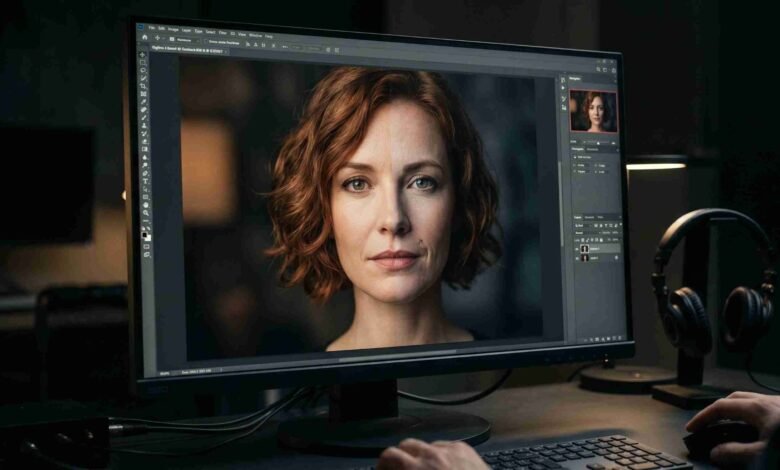
Face swap technology hasn’t become worse.
It has become better.
And that’s exactly why its flaws are easier to spot today.
A few years ago, face swap outputs were clearly artificial. Blurry edges, broken blending, and obvious distortions made it easy to identify manipulated images.
Now, the situation is different.
Most outputs look real at first glance. And that first glance is where expectations are formed. When the illusion breaks even slightly, it becomes far more noticeable than before.
This shift is not about failure. It’s about precision.
The Evolution From “Good Enough” to “Almost Perfect”
Earlier, the goal of face swap was simple.
Make it believable enough.
Today, that standard has changed.
Now the expectation is:
- Pixel-level realism
- Accurate lighting adaptation
- Expression consistency
- Identity preservation across angles
The gap between “good” and “perfect” is where most errors now exist.
And ironically, that gap is more visible than the earlier, obvious flaws.
Why Humans Notice Face Errors Instantly
Human vision is optimized for faces.
We don’t just see faces. We analyze them subconsciously.
This includes:
- Symmetry
- Eye alignment
- Skin tone variation
- Expression accuracy
Even minor inconsistencies trigger a sense that something is off.
When face swap outputs were low quality, the brain dismissed them quickly.
Now, because they are so close to real, the brain engages more deeply.
And that’s where errors get exposed.
The Real Challenge: Identity vs Environment
Face swap is not just about replacing a face.
It’s about maintaining two conflicting elements:
- The identity of the source
- The environment of the target
These include lighting, pose, expression, and surrounding context.
If identity dominates too much, the face looks pasted.
If the environment dominates, identity gets diluted.
This balancing act is where most systems struggle.
If you explore how face swap works inside Higgsfield, the strength lies in managing this balance efficiently. But even with advanced systems, edge cases still reveal limitations.
Extreme Pose Is Still the Breaking Point
The biggest challenge remains facial pose.
When a face rotates or tilts:
- Geometry changes
- Parts of the face become hidden
- Lighting shifts dynamically
Maintaining identity under these conditions is extremely complex.
Even state-of-the-art systems show degradation in these scenarios.
Recent research on face swapping highlights how extreme angles introduce distortions, misalignment, and identity inconsistency despite advanced architectures (https://arxiv.org/html/2601.16429v1).
This is not a minor issue.
It is one of the hardest problems in the field.
Why Better AI Makes Errors More Obvious
This is where things get interesting.
Improved AI doesn’t hide errors.
It amplifies them.
When everything else in the image looks perfect, the smallest flaw becomes the focal point.
For example:
- Slight mismatch in eye direction
- Tiny lighting inconsistency on the cheek
- Minor distortion near the jawline
These details would have gone unnoticed earlier.
Now they stand out.
The Role of Integrated AI Systems
Another important shift is how tools are built.
Platforms like Higgsfield are not trying to build every model from scratch.
Instead, they integrate multiple advanced AI systems into a unified workflow.
This includes:
- Face processing models
- Image enhancement systems
- Video generation pipelines
The advantage is efficiency.
The challenge is consistency.
Because when multiple models interact, maintaining perfect alignment across outputs becomes harder.
This layered approach improves capability but also introduces subtle points where errors can appear.
Lighting: The Silent Dealbreaker
Lighting mismatches are one of the most common reasons face swap fails.
Even when identity looks correct, lighting can break realism instantly.
This includes:
- Direction of light
- Intensity
- Color temperature
- Shadow placement
The human brain detects lighting inconsistencies faster than most people realize.
That’s why even high-quality outputs can feel slightly unnatural.
Expression Is More Than Geometry
Faces are not static structures.
They are dynamic systems of muscles and expressions.
A correct face with the wrong expression feels off.
Common issues include:
- Smiles that don’t match the eyes
- Tension inconsistencies
- Misaligned emotional cues
These are subtle.
But they are critical.
Speed vs Precision Trade-Off
Modern tools prioritize speed.
Real-time or near-real-time generation is becoming standard.
But speed introduces compromises.
More accurate systems often require:
- Heavier computation
- More processing time
Faster systems must simplify certain aspects.
Research shows that while highly detailed models can achieve better realism, they often struggle with real-time performance, forcing a trade-off between fidelity and speed.
This trade-off directly impacts visible quality.
The Uncanny Threshold Has Shifted
Earlier, the uncanny valley was easy to avoid.
Now, we operate inside it.
Because outputs are so close to real, the threshold for discomfort has shifted.
People don’t just ask:
“Is this real?”
They ask:
“Why does this feel slightly wrong?”
That difference is important.
What This Means for Creators
Creators need to adapt their expectations.
Face swap is powerful.
But it is not flawless.
To get the best results:
- Avoid extreme angles when possible
- Match lighting conditions carefully
- Use high-quality source images
- Review outputs critically
Understanding limitations is as important as using the tool itself.
Higgsfield’s Position in This Shift
Higgsfield sits at an interesting point in this evolution.
It is not building foundational AI models.
It is integrating the best available systems into a single workflow.
This approach:
- Speeds up production
- Simplifies complexity
- Enables scalable content creation
At the same time, it requires strong alignment across systems to maintain quality.
That’s where continuous improvement matters.
The Future: Precision Will Define Success
Face swap will continue to improve.
But improvement will not eliminate errors completely.
Instead, it will make them smaller.
And more noticeable.
The future of this space depends on:
- Better pose handling
- Improved lighting consistency
- Stronger identity preservation
- Faster processing without quality loss
Conclusion
Face swap errors are more noticeable today not because the technology is failing, but because it is approaching a level of realism where even the smallest imperfections stand out. As outputs become more refined, human perception becomes more critical, focusing on details that were previously ignored.
The challenge lies in balancing identity, environment, and performance across increasingly complex scenarios. Research continues to push these boundaries, but factors like pose variation, lighting, and real-time constraints still introduce visible limitations.
With platforms like Higgsfield integrating advanced AI systems into practical workflows, face swap is becoming more accessible and scalable. At the same time, the expectations around quality are rising just as quickly, making precision and attention to detail the defining factors for truly seamless results.